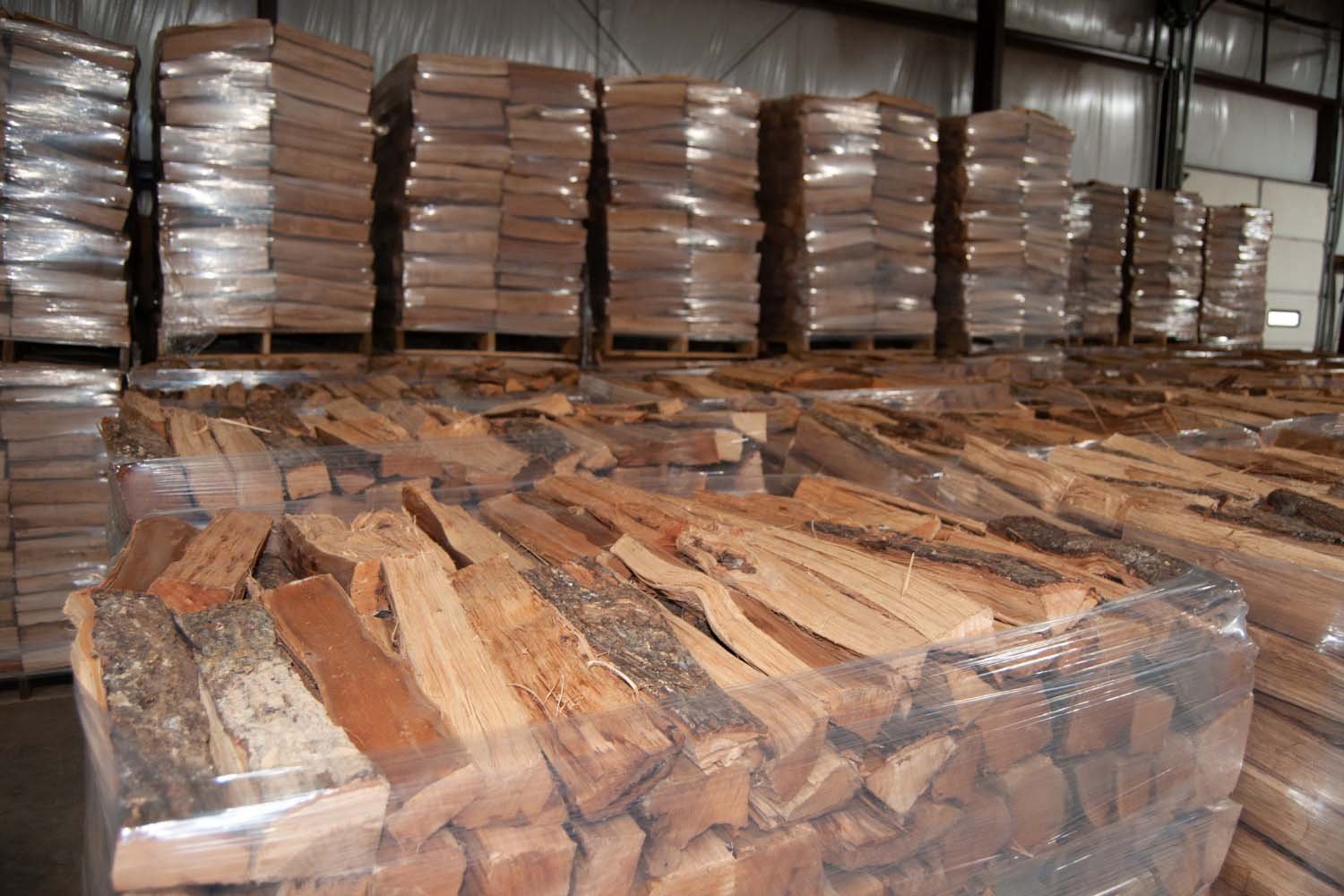
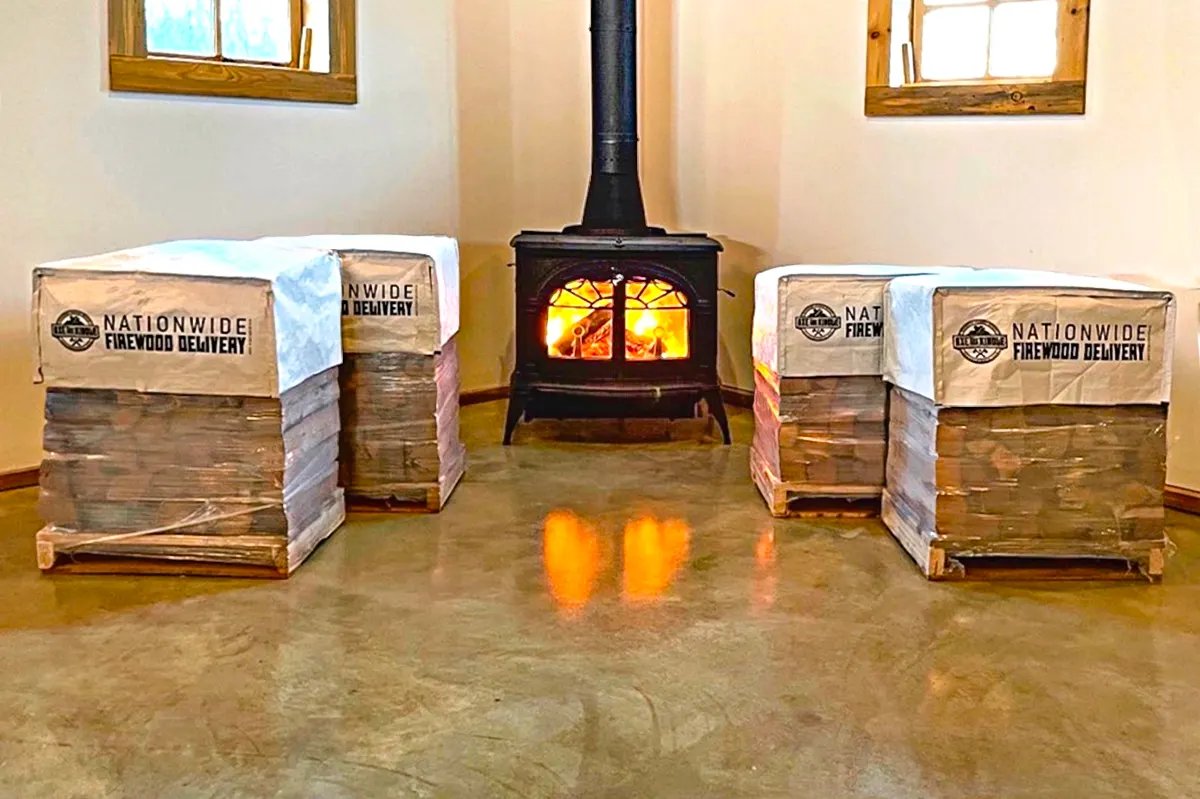
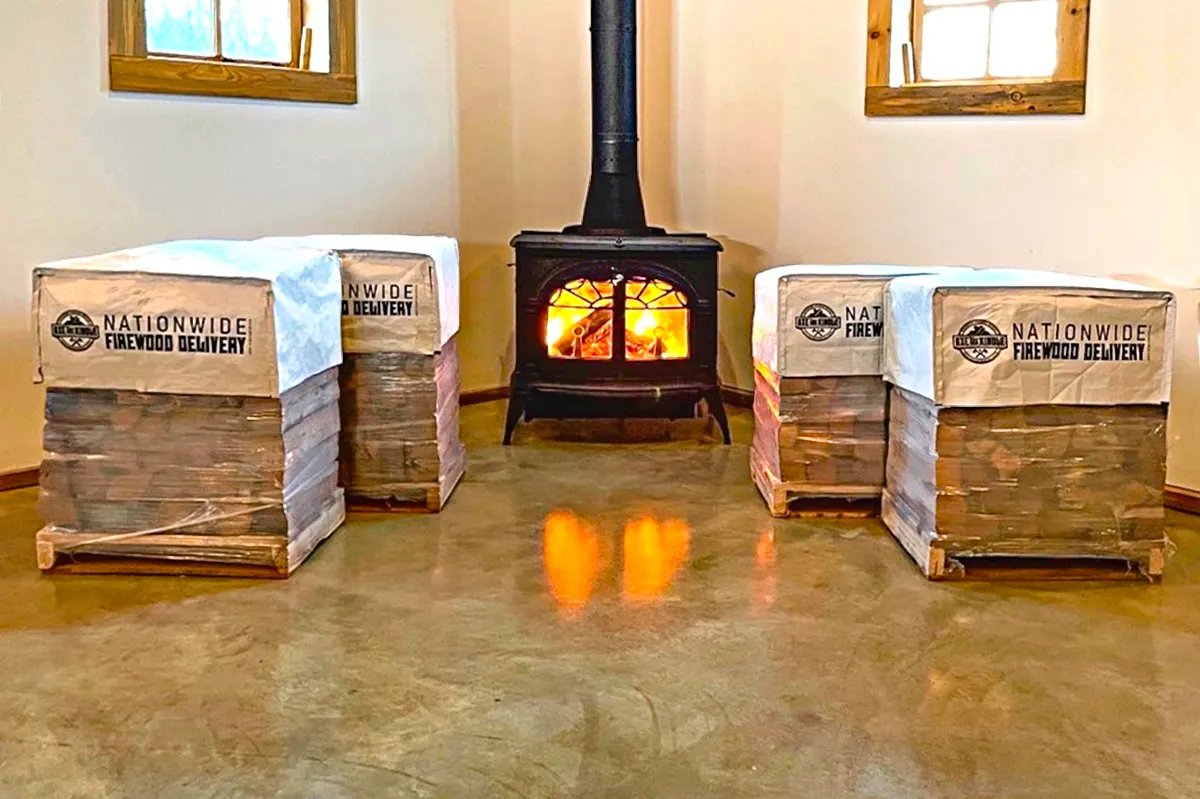
The benefits of Kiln-dried firewood include:
- Consistently low moisture content (below 20%)
- More efficient burning
- Higher energy efficiency and greater heat output
- Cleaner burns with minimal ash production
- Minimized impurities and emissions
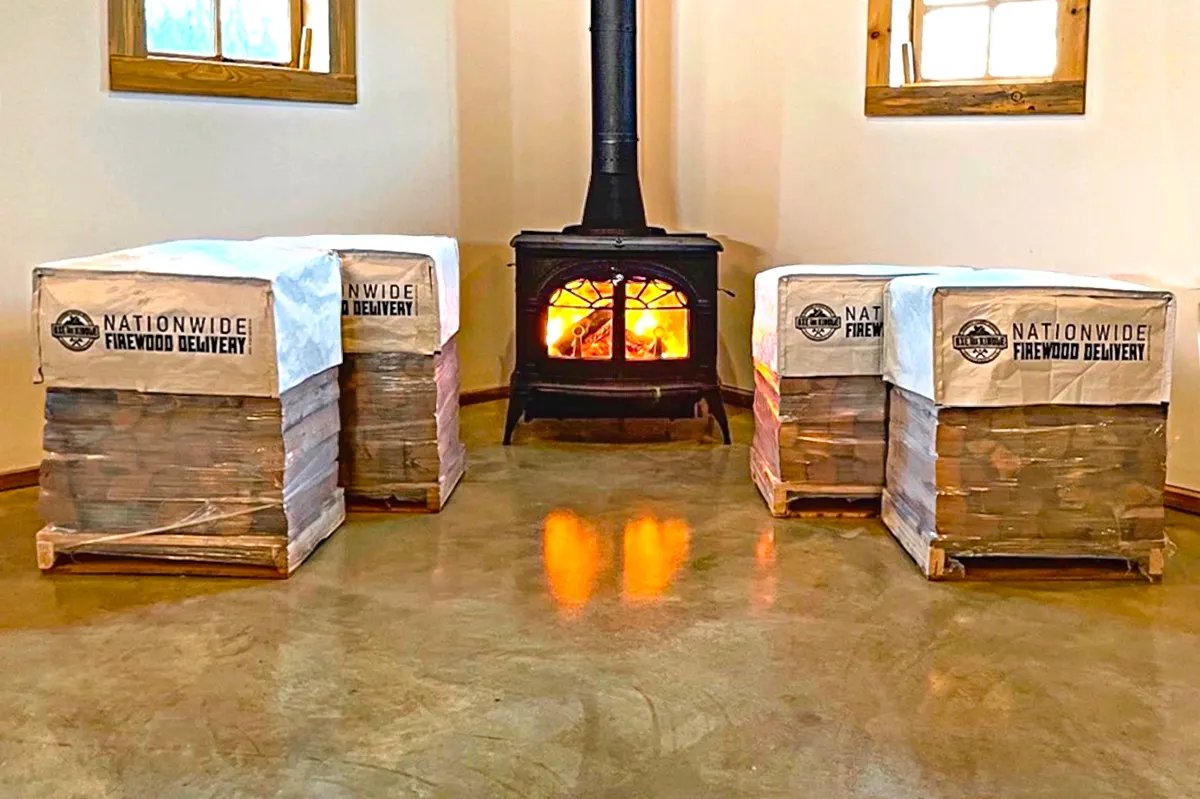
These advantages make kiln-dried firewood a superior choice for heating and burning, as it burns hotter compared to other types of firewood. Hence, kiln-dried firewood, also known as kiln-dried wood, can be the perfect choice for your fireplace or wood stove.
Moisture Content
You might be wondering, “Why does moisture content matter?” Simply put, the lower the moisture in the firewood, the better its burn efficiency. Kiln-drying effectively reduces the moisture content in firewood, making it superior for burning compared to green lumber, which can have over 60% moisture content. Properly kiln-dried firewood maintains a consistent moisture content of 8%-18% through its core, guaranteeing efficient and clean burning. Unlike air drying, kiln drying ensures a uniform moisture content throughout the wood, aiding in the prevention of warping and splitting. This is why many professionals prefer to kiln-dry their lumber.
Heat Output
Because of its low moisture content, kiln-dried firewood offers superior heat output compared to logs with higher moisture content. The kiln-drying process eliminates excess moisture from the wood, facilitating more efficient combustion. This leads to enhanced warmth and comfort, thus increasing the effectiveness of your wood stove or fireplace.
Moreover, the lower moisture content of kiln-dried firewood supports a slow and sustained combustion process, leading to an extended burn duration.
Reduced Creosote Buildup
One of the major concerns with burning firewood is the buildup of creosote, a flammable substance that can cause chimney fires. Fortunately, the lower moisture content of kiln-dried firewood facilitates more complete combustion, thus curtailing the formation of creosote. The elevated temperatures and regulated environment of the kiln-drying process aid in reducing the amount of creosote-forming impurities in the wood. This leads to less creosote and soot, lessening the risk of chimney fires and lowering the need for frequent chimney maintenance.